



The Full Menu: Everything a Local Moving Crew Can Do for You
Most moving companies offer far more than loading a truck and driving it across town. Packing, furniture assembly, appliance disconnection, wrapping, storage and cleanup are all routine parts of the work, and many households never ask for them because they assume the crew does one thing only.
What counts as a moving service, and what is just the van?
The van, the drivers and the labour to carry things in and out make up the baseline. Everything else is an add-on that a crew performs while it is already on site: preparing items before they travel, handling them in special ways, or tidying up afterward. Think of the baseline as transport and the rest as a menu you can order from, item by item. Some services happen the day before the move, some during it, and a few after the truck is empty.
How does professional packing and unpacking work?
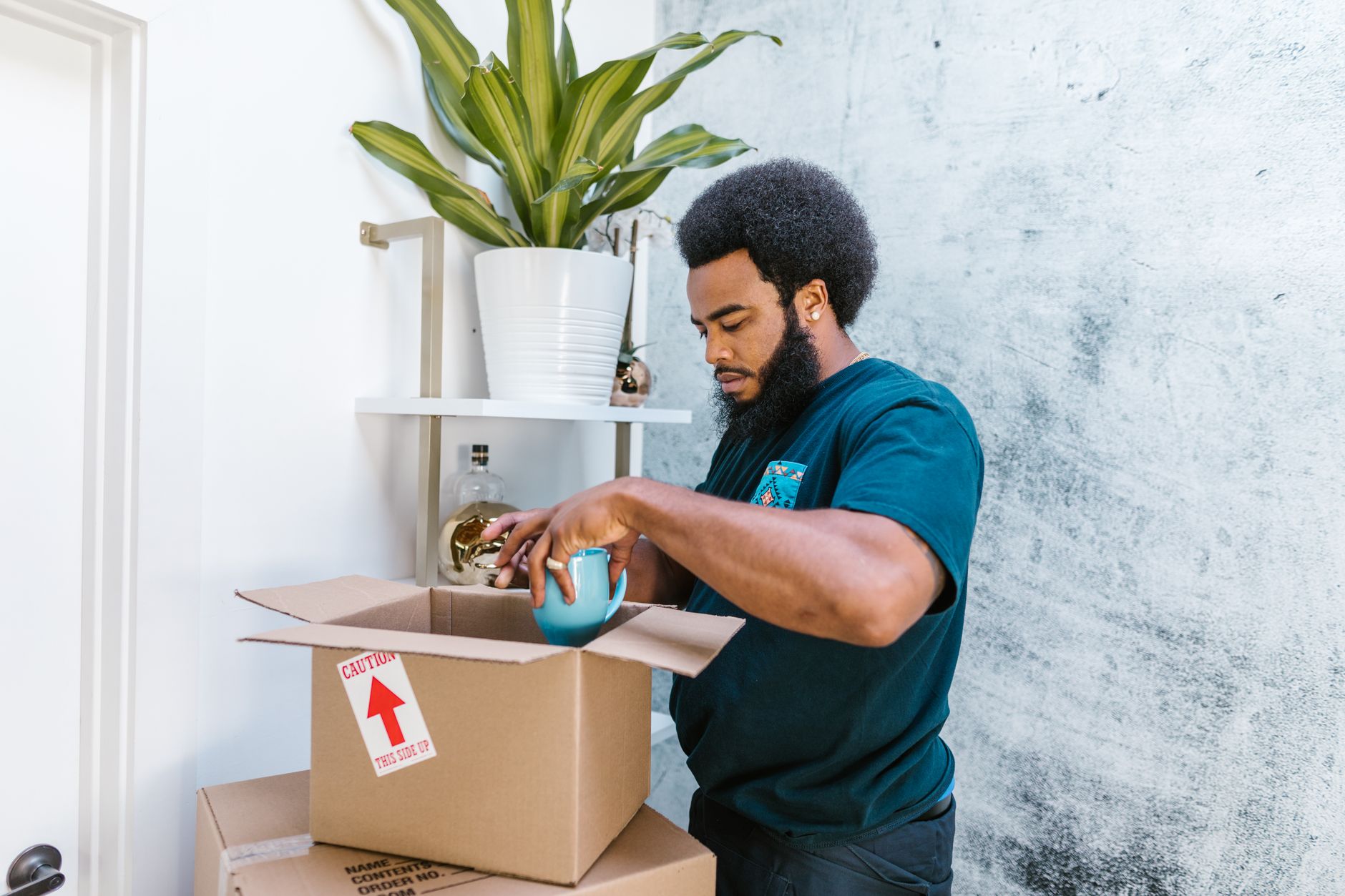
Packing means a crew arrives with boxes, paper, tape, and specialty cartons for dishes, wardrobes and framed art, then wraps and labels everything room by room. It can cover the whole home or just the difficult parts, such as the kitchen and the shelves of glassware. Unpacking is the reverse: boxes are opened at the new address, contents are placed where you direct, and the empty cartons are taken away.
It tends to suit people with little free time, those with a large amount of breakable items, and anyone dealing with an injury or a tight schedule. When you are comparing local movers, it is worth asking whether packing is offered in full, in part, or only for selected rooms, since practices differ from one company to the next.
Why would a crew take your furniture apart and put it back together?
Beds, large tables, wardrobes, desks and modular shelving often will not fit through a door or around a stairwell in one piece. Taking them apart protects both the furniture and the walls. A crew removes legs, headboards, shelves and doors, bags the screws and bolts, tapes the bag to the piece, and reassembles everything at the other end.
This is most useful for flat-pack furniture that has been assembled for years, for heavy bed frames, and for anything that needs to travel on its side. It is also worth requesting when you would rather not spend the first evening in a new home with an allen key.
What happens when appliances, fixtures and electronics need disconnecting?
Washers, dryers and fridges need to be unplugged, drained and secured before they move. A crew can often handle this for standard appliances, including emptying hoses, locking drums and bracing doors. Wall-mounted televisions, curtain rods and shelving can usually be taken down as well. Anything that involves gas lines, hard-wired fittings or complex plumbing generally calls for a licensed tradesperson, and a reputable crew will say so plainly.
Electronics are a smaller job but worth mentioning: photographing cable setups before unplugging a home office or entertainment centre makes the reconnecting much easier.
Can movers wrap, crate or hoist the awkward and fragile items?
Yes. Furniture pads and shrink wrap protect surfaces from scratches. Custom crates are built or supplied for things like large mirrors, glass tabletops, artwork and sculptures. Pianos, safes and very heavy items may require specialized equipment such as ramps, dollies, straps or, in some cases, a hoist to move them through a window or over a balcony.
Anyone with a piano, a stone-topped table or a valuable piece of art should raise it early, because the right equipment and extra hands have to be arranged ahead of time. Stairs and long carries also fall under this heading: a crew can plan for narrow staircases, walk-ups and long distances from the truck to the door.
When does short-term storage fit into a move?
Storage fills the gap when the dates of leaving one home and entering another do not line up. The crew loads your belongings, takes them to a secure facility, and delivers them later to the new address. It also suits people who are renovating, staging a home for sale, or moving into a space too small for everything at once.
Related to this is cleanup. Many crews will remove leftover packing paper, flattened boxes and other debris once the unpacking is done, which leaves the new home usable straight away instead of buried in cardboard.
How do you work out which services your move actually needs?
Walk through the home and note where the effort is concentrated. Lots of fragile items point toward packing help. Large beds and wardrobes suggest disassembly. A mismatch in dates calls for storage. A building with narrow stairs or no elevator means you should mention carries up front. Most households need only two or three items from the menu, not all of it.
Ask the crew what they include as standard and what they treat as extras, then choose the services that save you the most time or reduce the most risk.
A move is rarely one job, and the households that get the most from a crew are usually the ones who knew the menu existed.

The Slow Price of Never Digitizing Your Paper Archives
Ten years from now, a business that never digitized its paper is paying rent on a storage unit full of documents nobody can find, has lost at least one box to water or time, and cannot answer a simple records request without sending someone to dig through cabinets for an afternoon. None of that happens in a single dramatic moment. It accumulates, quietly, one filed invoice at a time, until the cost is baked into how the company operates.
The reason owners put it off is understandable. The cabinets work today. The storage unit is cheap enough. Digitizing feels like a project with no deadline, so it never gets a deadline. But paper doesn’t stay neutral while you wait. It compounds, degrades, and eventually demands attention at the worst possible time.
If the file cabinets just keep filling up, what breaks first?
Space goes first. A growing business generates more paper every year, and the cabinets that fit comfortably in year one start crowding hallways by year five. Then comes the offsite unit, then a second one. Each is a recurring expense that produces nothing.
What breaks underneath the space problem is findability. The more paper you store, the longer it takes to locate any single piece of it, and the more tempting it becomes to file things sloppily because the system is already overwhelmed. Retrieval time creeps up until staff quietly stop pulling old records at all, which means the archive exists but is functionally useless.
What happens to buried records when a flood, fire, or mold reaches the storage room
Paper has a single physical copy, and physical copies can be destroyed in one event. Along the Front Range, a burst pipe in winter or a basement that takes on water during a heavy summer storm can soak an entire row of boxes overnight. Fire needs no introduction. And in a closed storage room with any humidity, mold doesn’t need a disaster at all; it just needs time and a cardboard box sitting against a cool wall.
When that happens to an undigitized archive, the records are simply gone. There is no backup, no second copy, nothing to restore from. Contracts, tax documentation, signed agreements, and personnel files vanish together, and you often don’t discover the loss until you reach for the exact document you needed.
The retrieval nightmare that unfolds when an auditor asks for a single document
An auditor, an attorney, or a regulator rarely asks for your whole archive. They ask for one specific document from a specific date, and they expect it quickly. With paper, that request turns into a scavenger hunt: someone drives to the storage unit, opens boxes by hand, and hopes the filing logic from years ago still makes sense.
If it turns up in an hour, you got lucky. If it takes two days, you’ve spent payroll on searching and signaled to whoever asked that your recordkeeping is shaky. And if it never turns up, you may be unable to prove something you genuinely did correctly, which is its own kind of liability.
If a key employee who knew the filing system leaves, who finds anything?
Most paper archives are held together by one person’s memory. They know which cabinet holds what, which years got reorganized, and where the exceptions live. That knowledge is unwritten, and it walks out the door the day that person retires or quits. What’s left is a room full of boxes that technically contain your history but that no one can navigate confidently. New staff inherit a filing system they didn’t build and can’t fully decode.
How digitizing changes every one of those outcomes
Every consequence above shares the same root: a single, fragile, hard-to-search physical copy. Converting those records into indexed digital files removes that root. Searchable files are found in seconds, not afternoons. Backed-up files survive the flooded storage room. And a document that lives in a system doesn’t depend on one employee’s memory to be retrievable. Working with a service like Document Scanning Boulder turns the slow, open-ended liability of a paper archive into a one-time project with a clear end, after which the cabinets stop multiplying and the storage unit can finally be emptied.
The paper will keep accumulating whether or not you decide to act, so the real question is simply how large the archive will be when you finally choose to deal with it.

Which Kind of Roofing Help Actually Suits Your Job?
Two slipped tiles after a windy night is a very different problem from a thirty-year-old roof that has started leaking in three places. Yet homeowners often reach for the same solution in both cases, grabbing whoever answers the phone first or whoever happens to have the biggest advert. The type of roofing help you need depends almost entirely on the job in front of you, and picking the wrong kind of professional can cost you money, time, or peace of mind.
Start by naming the problem you’re solving
Before you compare anyone, get clear on what you actually have. A single leak traced to one cracked tile, a sagging section of gutter, a full re-roof, a flat roof that ponds water, storm damage that needs an insurance claim, these all pull in different directions. Write down what you can see, when it started, and how urgent it feels. A job that can wait a fortnight gives you room to shop around. A job that is letting water into a bedroom does not. Naming the problem honestly also stops you from over-buying, because not every small repair justifies a large firm with a long lead time.
Sole trader or established firm?
A good sole trader is often the right answer for straightforward, well-defined work: replacing tiles, repointing a ridge, clearing and refitting guttering. You tend to deal directly with the person doing the work, prices are keener, and a skilled one-person operation can be excellent. The trade-offs are capacity and cover. If they fall ill, or if the job turns out bigger than expected, there is no second crew to lean on. An established firm carries more overhead and usually quotes higher, but brings a team, scaffolding resources, structured guarantees, and the ability to handle a full roof from survey to sign-off. For large or complex jobs, that depth earns its keep.
When a national contractor makes sense and when it doesn’t
National outfits market heavily and can look reassuring, with call centres, warranties, and finance options. They can genuinely suit big replacement projects where you want a long paper-backed guarantee and don’t mind a more corporate process. Where they tend to disappoint is the small repair and the quick response. You may be routed through a subcontractor you never chose, pay for the marketing spend baked into the price, and wait longer for someone to actually turn up. For a modest job, the overhead rarely works in your favour.
The case for choosing roofers in Epping over someone further afield
Proximity does more than shorten the drive. A roofer based near you can survey quickly, return easily if something needs adjusting, and knows the housing stock and the typical problems in the area. Local reputation also matters, because a firm that depends on word of mouth among neighbours has every reason to leave you satisfied. For most domestic work this is where the balance lands, and hiring roofers in Epping rather than a crew travelling in from an hour away usually means faster callbacks, easier aftercare, and someone you can actually hold to account.
Emergency call-out versus a planned appointment
An emergency call-out exists to stop active damage: water pouring in, tiles down on a path, a tarpaulin needed before the next storm. It is a temporary fix by design, and you pay a premium for speed. Don’t confuse it with the proper repair that should follow. A planned appointment, booked a week or two out, lets the roofer survey properly, order the right materials, and price the job without pressure. If what you have is genuinely dangerous, call out. If it is merely annoying, book it in and save money.
How to match the route to your budget and timeline
Lay your two constraints side by side. Tight budget, flexible timing: a local sole trader or small firm with time to quote carefully. Flexible budget, tight timing: an established local team that can mobilise a crew quickly. Insurance-led replacement: a firm comfortable with documentation and surveys. Genuine emergency: whoever can get there safely today, with the real repair scheduled afterwards. Matching the route to these two levers keeps you from paying national-contractor prices for a tile swap, or waiting on a sole trader for a job that needs a full team.
Making the final call with confidence
Your next step is simple: write one sentence describing your job, note which of the two constraints is tighter, and draw up a shortlist of two or three providers that fit that profile before you request a single quote.
How to Optimize Your Flooring SEO

If you’re trying to rank for flooring keywords, you need to pay close attention to your website’s architecture and how you use keywords. Search engine algorithms and user preferences change with time, and it’s essential to monitor your progress. Luckily, there are several SEO tools to help you measure the effectiveness of your strategy.
Website architecture
The best website architecture is built around a solid foundation. It should be easy to navigate and provides the best user experience. If you have a difficult-to-navigate site, your visitors will be less likely to return. You want to create an experience that will keep visitors on your website and increase conversion rates. To do this, you need to focus on content. Make sure to research your competitors’ content, and consider how you can improve it.
Your website architecture refers to the structure of the pages on your website, including links between pages. Having a clear structure is essential to helping users find the information they need and is also important for search engines. Choosing the right website architecture can help increase conversions and retention.
Keyword research
You need to be sure that you’re using the right keywords to attract customers. If you have a flooring store, it’s important to avoid using broad terms and focus on long-tail keywords. These are keywords related to location, brands, and unique selling points. It’s also important to highlight your installation services and prices. By doing a little keyword research, you can come up with a list of keywords that will be most helpful to your customers.
In addition to using a variety of different keywords, you should also make sure that you have enough content to match the needs of your target audience. Using a keyword research tool like SEMRush can help you find a list of relevant keywords that your target audience is searching for.
User intent
The best way to improve your flooring SEO is to target users with the right intent. This means creating content based on the question they’re asking. For example, if someone is looking for hardwood flooring installation, their intent is to learn about the process. If someone is looking for tips on how to install a hardwood flooring, their intent is to learn how to do it correctly.
Google and other search engines use the concept of User Intent to categorize web pages based on the keywords used. The best performing content usually leads the way in search results. A title can also indicate the type of content a user is looking for. However, it takes some practice to determine the user’s intent.
Mobile-friendliness
Mobile-friendliness is critical to your flooring website. Without it, consumers will find it difficult to view your products and services, which can be frustrating and cause them to abandon the site. Fortunately, it is easy to create a mobile-friendly website that will engage consumers and boost traffic.
Mobile-friendliness can improve your search-engine rankings. Most consumers now use their mobile devices to search the web. Google recently announced that more people search on their phones than on their computers in ten countries. As a result, if a flooring website is mobile-friendly, it will appear higher in search results and attract customers.
Developing a mobile-friendly website also means implementing other mobile-friendly design practices. For example, large buttons are easy to tap without zooming, and hyperlinks should be separated by enough space to avoid accidental clicks.
Site map
SEO for flooring is the process of increasing local visibility through the use of search engines such as Google. This includes optimizing website design, on-page elements, and technical SEO. It involves intelligent keyword research to determine which customer search phrases you should target. Finally, it includes local SEO to get your flooring company ranked in local searches.
A site map is a map of your website showing all the sections, links, and other information you want potential users to see. It also helps search engines understand your site’s structure. Site maps can be created in two different ways – a static HTML file or an XML sitemap. Sitemaps based on HTML files are known as traditional sitemaps. They outline the first and second levels of your site’s structure and are mostly concerned with users. A site map should include every page on your website.
Advertisement
